
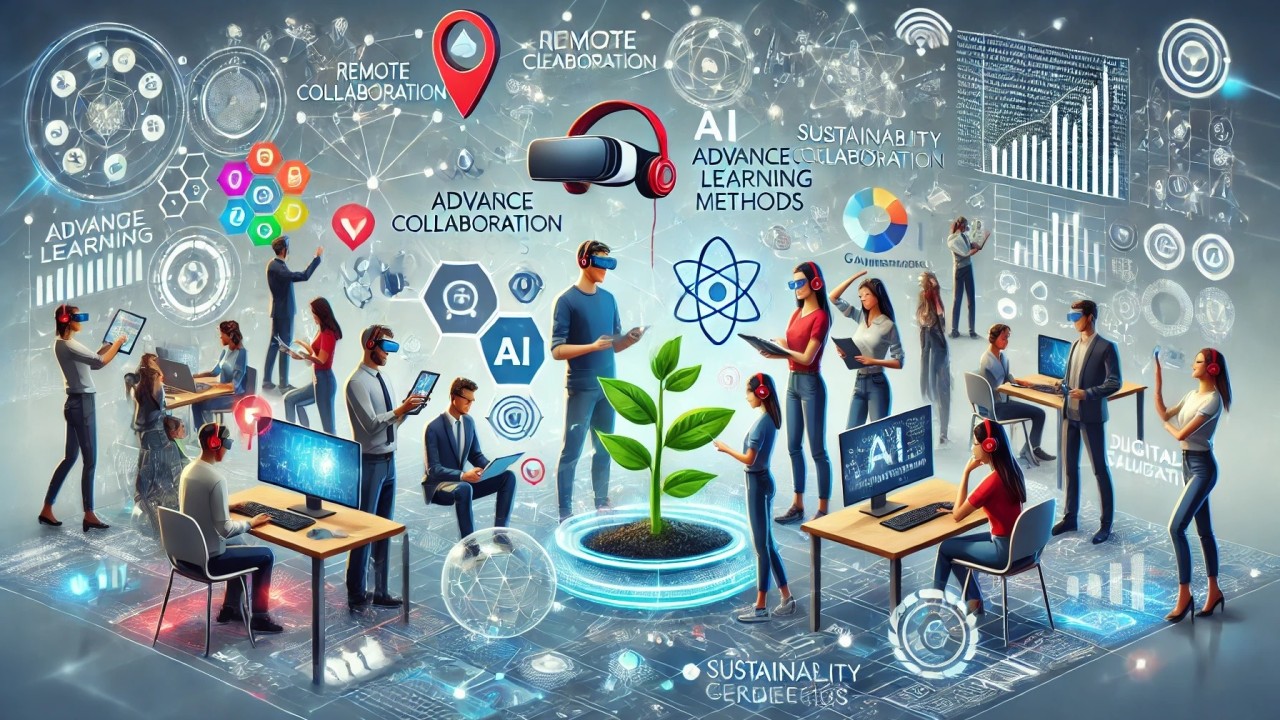
The Future of Education: Learning Beyond Classrooms and Certificates
The Future of Education: Learning Beyond Classrooms and Certificates
Education is undergoing one of the most profound transformations in human history. What once revolved around classrooms, chalkboards, and rigid curricula is now being reshaped by technology, global connectivity, and changing economic demands. The future of education is not simply digital—it is adaptive, personalized, and lifelong.
From Standardized Learning to Personalized Paths
Traditional education systems were designed for uniformity. Students moved at the same pace, studied the same subjects, and were evaluated using the same methods. In the future, this one-size-fits-all model is giving way to personalized learning.
Artificial intelligence and data-driven tools are enabling education systems to adapt to individual strengths, weaknesses, and interests. Learners can now progress at their own pace, receive tailored feedback, and focus on skills that align with their goals. Education is becoming more learner-centered than institution-centered.
Technology as an Enabler, Not a Replacement
Technology will not replace teachers—but it will redefine their role. In the future, educators are less information deliverers and more mentors, guides, and critical thinkers. Online platforms, virtual classrooms, and AI tutors handle repetition and content delivery, while human teachers focus on creativity, ethics, and problem-solving.
Virtual reality, augmented reality, and simulations are also changing how subjects are taught—allowing students to explore historical events, conduct virtual science experiments, or practice real-world scenarios safely and interactively.
Skills Over Certificates
The job market is evolving faster than traditional education systems can keep up. As a result, employers are placing greater value on skills, adaptability, and continuous learning rather than degrees alone.
Micro-credentials, online certifications, bootcamps, and project-based learning are becoming powerful alternatives to traditional qualifications. The future of education prioritizes what learners can do, not just what they can prove on paper.
Lifelong Learning Becomes the New Normal
In the past, education was front-loaded into the early years of life. In the future, learning is continuous. Rapid technological change means skills can become outdated within years, sometimes months.
Lifelong learning is no longer optional—it is essential. Professionals will constantly reskill and upskill to remain relevant. Education systems are shifting to support adults, remote learners, and non-traditional students across all stages of life.
Global Access and Digital Equity
One of the greatest promises of future education is accessibility. Online learning has already broken geographical barriers, allowing students from different parts of the world to access high-quality education.
However, this future also raises concerns about digital inequality. Access to technology, reliable internet, and digital literacy will determine who benefits most. Addressing this gap will be critical to ensuring education empowers rather than excludes.
The Human Element Still Matters
Despite rapid technological advancement, the future of education remains deeply human. Critical thinking, emotional intelligence, creativity, collaboration, and ethical judgment cannot be automated.
Education of the future must balance innovation with values—preparing learners not only for jobs, but for responsible citizenship in a complex, interconnected world.
A New Definition of Education
The future of education is flexible, skill-driven, and globally connected. It moves beyond classrooms and certificates to focus on growth, relevance, and lifelong impact.
As learning evolves, those who embrace curiosity, adaptability, and continuous improvement will be best positioned to thrive—not just in the workplace, but in society as a whole.