Inside Iran’s Unrest: What the Protests Reveal About Power, Economy, and Control
Inside Iran’s Unrest: What the Protests Reveal About Power, Economy, and Control
Iran is once again at the center of global attention, but the current wave of unrest is not a sudden explosion—it is the result of pressures that have been building quietly for years. While officials describe the situation as foreign-driven instability, evidence on the ground points to a deeper internal crisis rooted in economic collapse, political rigidity, and a widening gap between the state and society.
This is not simply a protest movement. It is a stress test of Iran’s governing system.
The Economic Breaking Point
Investigations into the origins of the protests reveal a clear trigger: economic suffocation. Iran’s currency has lost much of its value, inflation has surged, and wages have failed to keep pace with rising food, housing, and energy costs. For millions of households, survival—not reform—has become the immediate concern.
Small business owners report collapsing sales. Workers describe salaries that no longer cover basic necessities. Pensioners and public servants—once considered politically stable groups—are now among those protesting.
These are not short-term shocks. Analysts point to years of sanctions, weak fiscal discipline, corruption, and capital flight. The result is an economy that functions, but barely—and only for those closest to power.
Protest Patterns Suggest Coordination, Not Chaos
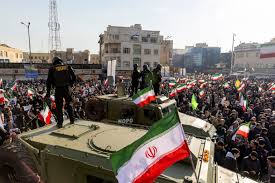
Despite communication blackouts and heavy surveillance, protests have appeared simultaneously across multiple regions, suggesting decentralized coordination rather than spontaneous unrest. Demonstrations have followed similar patterns: rapid assembly, short duration, and dispersal before security forces arrive.
This points to a population that has adapted to repression rather than been deterred by it.
Unlike earlier movements driven largely by youth or urban elites, the current protests cut across age groups, social classes, and professions. That breadth makes them harder to isolate—and more difficult to dismiss.
The State’s Response: Control Over Reform
The government’s response has been consistent and forceful. Security forces have been deployed nationwide. Internet access has been sharply restricted. Arrests have been carried out on a large scale, often without public records or transparency.
Hospitals and medical professionals, speaking anonymously, describe treating injuries consistent with live ammunition and crowd-control weapons. Human rights organizations report rising death tolls, though exact numbers remain difficult to verify due to restricted access and media suppression.
What stands out is not just the use of force, but the absence of meaningful reform signals. There have been no major policy reversals, no emergency economic relief, and no public roadmap addressing core grievances.
The message appears clear: stability through enforcement, not negotiation.
Information as a Battleground
One of the most critical elements of the crisis is the information war. State media frames protests as externally orchestrated, while independent reporting is nearly impossible inside the country.
Internet shutdowns are not only about preventing coordination—they also limit evidence, delay global reaction, and create uncertainty. In modern unrest, control of narrative is as powerful as control of streets.
This strategy has worked before. Whether it will work again is increasingly uncertain.
International Pressure, Limited Leverage
Global reaction has been swift but familiar. Western governments have condemned the violence and announced plans for additional sanctions targeting Iranian officials. Yet history suggests sanctions alone rarely produce internal reform—and often deepen economic hardship for civilians.
Diplomatic channels remain strained, and regional tensions continue to shape how far international actors are willing to go. For now, global pressure appears symbolic rather than transformative.
Why This Moment Is Different
What distinguishes this crisis from previous ones is not just its scale, but its context. Iran faces:
- A fragile economy with limited recovery options
- A young population with declining trust in institutions
- A global environment less tolerant of prolonged instability
- Regional pressures that limit strategic flexibility
This convergence leaves little room for error.
BiBLOG Report’s Investigation Insight
At BiBLOG Report, our assessment is that Iran’s unrest reflects a system struggling to balance control with legitimacy. Repression may suppress protests temporarily, but it does not resolve the structural causes driving them.
The central question is no longer whether protests will continue—but whether the state can adapt before economic pressure and public exhaustion turn into irreversible instability.
Iran’s future may depend less on external threats and more on how long internal pressure can be contained without meaningful change.