The Role of Media in Shaping Political Reality
Media doesn’t just report political reality, it actively constructs it through decisions about what to cover, how to frame issues, which sources to feature, and what narratives to emphasize. The news you consume doesn’t provide neutral window into political events but rather carefully curated version of reality shaped by editorial choices, commercial pressures, ideological biases, and structural constraints determining what counts as news. Media plays a crucial role in shaping political landscapes by influencing what issues matter to the public through agenda-setting, framing, and gatekeeping.
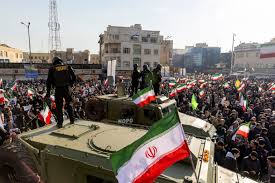
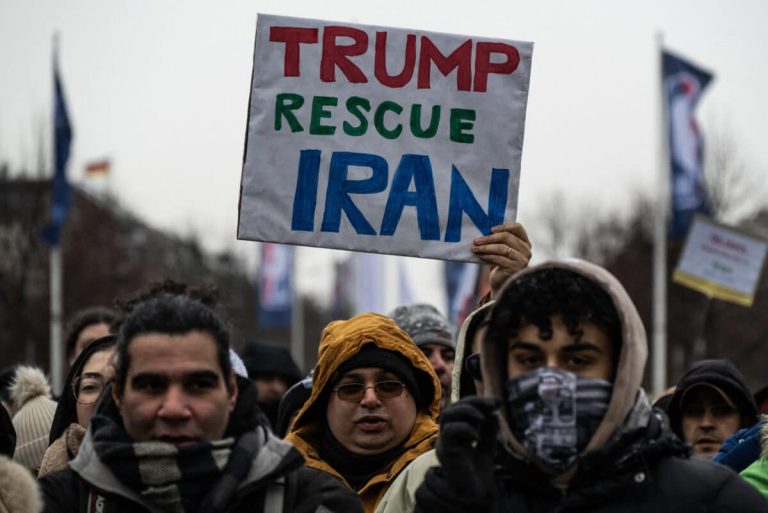
Media outlets are not just passive conveyors of information but actively interpret and frame political developments. This framing can shape how audiences perceive issues, leaders, and institutions. The language used to describe a protest, whether it’s called a demonstration or a riot, can influence public attitudes significantly. The selection of which stories to highlight or omit also plays a powerful role in setting the political agenda. These editorial decisions occurring thousands of times daily across newsrooms determine what political reality looks like to citizens who depend on media for information about events they cannot witness directly.
Through mechanisms like agenda-setting, framing, and cultivating dominant narratives, media can highlight issues, shape perceptions, and create public pressure on policymakers. Understanding how media constructs political reality is essential because the version of politics you see through media shapes your opinions, votes, and participation. The power dynamics, controversies, and issues that dominate political discourse exist partly because media chose to make them dominant. Let’s examine exactly how media shapes political reality and why this matters more than most people recognize.
Agenda Setting Determines What Matters
Agenda-setting theory focuses on how media prioritizes issues. According to this theory, the media have a powerful influence on the public agenda when it comes to issues that the public finds important. This suggests that media are not necessarily effective at telling people what to think but are remarkably effective at telling them what to think about. By selecting certain topics to cover extensively, media shape the public agenda and influence what people consider important political issues.
For example, selective coverage allows media to emphasize certain issues while omitting or downplaying others, thus guiding public perception. If media extensively covers immigration as major issue, immigration rises on public agenda regardless of whether immigration patterns changed substantially. If media stops covering environmental issues, public concern about environment declines even if environmental problems worsen. The correlation between media coverage volume and public issue importance reveals agenda-setting power.
In India, the media’s focus on topics like economic reforms, healthcare, and education can put pressure on policymakers to address these issues. Politicians respond to what they perceive as public priorities, and they gauge public priorities largely through media coverage. This creates situation where media choices about coverage determine which problems government addresses and which get ignored regardless of actual severity or urgency. The temporal advantage is often enjoyed by governments given their privileged access to knowledge about societal problems or what has been termed their epistemic authority.
The agenda-setting function means media acts as gatekeeper determining which events, issues, and perspectives reach public consciousness. Thousands of potential stories exist daily but only tiny fraction receive coverage. The selection process determining what becomes news versus what remains unknown shapes political reality by defining the boundaries of public discussion. Issues receiving no coverage effectively don’t exist politically regardless of their actual importance.
Framing Shapes How You Understand Issues
Framing is the process by which media present information emphasizing certain aspects over others to shape the audience’s perception. Frames influence how people understand and interpret information by highlighting specific elements such as causes, consequences, or moral judgments. Media outlets can employ framing devices that use selective angles, key terms, or emotional lighting that shape how people view and make political decisions all by focusing on certain angles of coverage.
How a candidate is described, for instance as a champion of the people or an elitist, can dramatically sway the opinions of voters. How political events are framed, for example when the economy is presented as recovering versus declining, shapes public perception of government competence and influences voting behavior. The same objective facts can support completely different narratives depending on which aspects media emphasizes and which it minimizes or ignores.
Several case studies illustrate the impact of media framing on public perception. One notable example is the coverage of immigration issues where a study found that media framed immigration predominantly in terms of economic impact and national security, influencing public opinion towards viewing immigrants as economic threats and security risks. Another example is the framing of climate change where different media outlets present it either as urgent crisis requiring immediate action or as uncertain theory not justifying economic costs.
Media is not just a passive purveyor of information but actively shapes perceptions by how it presents stories. Psychological manipulation through media coverage can lead individuals to form opinions based on specific narratives rather than objective facts. This form of influence is particularly powerful in political contexts where media coverage can sway public opinion by presenting issues in ways that align with certain agendas. The framing is often invisible to audiences who believe they’re consuming objective news when they’re actually receiving ideologically shaped interpretations.
Partisan Media Reinforces Division
Major news outlets have distinct biases that align with their ideological leanings. A study analyzed the political slant of major news outlets and found significant variations in the coverage and framing of issues reflecting their partisan positions. These outlets not only provide news through a partisan lens but also contribute to the polarization of public opinion by reinforcing existing beliefs and biases. For instance, conservative outlets might emphasize topics like national security and immigration while liberal outlets focus on social justice and inequality.
Exposure to partisan media can reinforce pre-existing beliefs and increase ideological divides among the audience. Research found that individuals who consumed news from ideologically congruent sources became more politically polarized over time. This creates echo chambers where people only encounter information confirming existing views while contrary information gets filtered out. The result is increasing polarization as different segments of population consume completely different media diets producing incompatible understandings of political reality.
Media bias can contribute to polarization where exposure to slanted coverage hardens positions and makes compromise seem like betrayal. In highly polarized environment, the same event gets reported completely differently across partisan media with each side presenting version supporting their ideological narrative. Citizens consuming partisan media develop fundamentally different understandings of political events making productive dialogue nearly impossible.
The business model of partisan media depends on audience loyalty maintained through ideological consistency. This creates incentive to present information confirming audience biases rather than challenging them with uncomfortable facts. The media organization prioritizing truth over ideology risks losing audience to competitors willing to tell people what they want to hear. This market pressure pushes media toward increasing partisanship and away from objective reporting.
Cultivating Narratives Through Repetition
Over time, media can cultivate dominant narratives that become part of the collective consciousness. This is particularly evident in the way certain stereotypes are perpetuated through repeated portrayals. Constant repetition of specific themes can embed them in public consciousness. For example, repeated coverage of corruption can lead to a general perception that all politicians are corrupt. The cumulative effect of repeated framing creates reality in public mind regardless of whether it accurately represents actual conditions.
Cultivation theory posits that long-term exposure to media content shapes individuals’ perceptions of reality. For instance, regular viewers of crime dramas might perceive the world as more dangerous than it actually is. In the Indian context, constant exposure to news about communal tensions can cultivate a heightened sense of insecurity among different communities. The media reality becomes psychological reality through sustained exposure even when it diverges significantly from actual conditions.
Visual imagery has profound impact. Images and videos create emotional responses that shape opinion more powerfully than text. The visual representation of issues such as the plight of migrant workers during the COVID-19 lockdown can evoke strong emotional responses and shape public opinion. Media organizations understand visual power and select images strategically to reinforce narratives they’re promoting. The choice of which images to show repeatedly and which to never display shapes how public understands political issues.
The narrative cultivation happens gradually through accumulation of coverage patterns rather than single pieces. Audiences don’t consciously notice they’re being shaped because each individual story seems like objective reporting. Only stepping back to examine coverage patterns over time reveals systematic bias in how issues are presented. By the time narrative is embedded, it feels like common sense rather than media construction.
Social Media Transforms Political Communication
Social media has fundamentally altered political communication by removing traditional gatekeepers and enabling direct, rapid, and often unfiltered information dissemination. Political parties leverage social media to communicate their policies, mobilize supporters, and counter opposition narratives. Unlike traditional media, social media enables parties to bypass intermediaries and speak directly to their audience. This direct engagement fosters a sense of connection between politicians and voters allowing for immediate feedback and interaction.
Parties use targeted advertising, viral campaigns, and influencer endorsements to sway public sentiment. Data analytics help them craft messages tailored to specific demographics enhancing their outreach and effectiveness. This microtargeting capability means different groups receive completely different political messages carefully crafted to appeal to their specific concerns and biases. The fragmentation of political communication through social media means no shared political reality exists anymore, only individualized realities tailored algorithmically.
Social media plays an increasing role in shaping public perception and these platforms allow users to access tailored information. The algorithmic curation of content means what you see on social media depends on what you’ve engaged with previously creating feedback loops that reinforce existing views. Research on how fake news on social media affected political views found that fake news exposure was correlated with changes in votes cast. The spread of misinformation on social media platforms shapes political reality by injecting false information into public discourse that becomes widely believed.
By dominating social media with hashtags and videos highlighting specific narratives, political parties can shape voter sentiment around preferred issues rather than opposition’s chosen topics. This controlled narrative helps rally support and influence public perception. The party or candidate that masters social media narrative control gains significant advantage in shaping what political reality looks like to voters increasingly getting information through these platforms.
Media as Political Power Tool
Governments and political regimes, both democratic and authoritarian, recognize the media’s potential as a tool of power. In some cases, state-run media serve to promote government narratives, suppress dissent, or delegitimize opposition voices. In others, legal and economic pressures are used to intimidate independent media outlets. Even in democracies, politicians may attempt to manipulate the media through strategic leaks, exclusive interviews, or by discrediting unfavorable outlets.
The term fake news has become a political weapon used to dismiss critical coverage and erode public trust in journalism. Politicians attacking media credibility aim to immunize themselves against negative coverage by preemptively discrediting sources that might expose wrongdoing or incompetence. This erosion of media credibility serves authoritarian purposes by making citizens unable to distinguish truth from propaganda, defaulting to believing whatever aligns with existing biases.
Literature on the relationship between mass media coverage and political debate suggests that the two spheres are mutually constitutive, influencing one another in important ways. The state and its political elites play an important role in shaping media coverage as patrons, censors, and as perceived sources of credible information. Government representatives and mainstream parties are often the primary sources of information for media, in turn perpetuating narratives favorable to those in power.
Politicians constantly scan media coverage to gain understanding of the beliefs, goals, and priorities of publics whose support they are seeking to win. This means that not only is the media influencing how they select and compose their narratives but politicians are also using the media as a sounding board for how their messages are landing as well as a crucial monitor of public attitudes. The symbiotic relationship between media and politics creates feedback loop where each shapes the other in ongoing dance determining political reality.
The Responsibility of Media Consumers
As consumers of media, it’s essential to be aware of its influence and approach information critically. Understanding that media actively constructs political reality rather than neutrally reporting it allows more skeptical and analytical consumption of news. Recognizing framing, agenda-setting, and partisan bias in coverage helps resist manipulation and form more independent judgments about political issues.
The power of media to influence political outcomes underscores the need for ethical journalism, informed citizenship, and vigilant institutions. Media literacy becomes essential civic skill allowing citizens to decode how information is presented, identify bias and manipulation, and seek out diverse sources providing different perspectives. Without this critical consumption, media power to shape political reality operates unchecked determining what citizens believe about politics.
Media plays a crucial role in shaping public opinion and influencing policy. Theories like the Two-Step Flow, Cultivation Theory, and Agenda-Setting help us understand these processes. In the digital age, the landscape of media has evolved bringing both opportunities and challenges. The democratization of content creation means anyone can contribute to political discourse but also means misinformation spreads rapidly alongside credible information.
The role of media in shaping political reality isn’t inherently good or bad but represents powerful force that can serve democratic accountability or enable manipulation depending on how it operates and how citizens consume it. Understanding this role is essential for functioning democracy because political reality constructed through media shapes everything from voting behavior to policy priorities to fundamental understanding of what problems society faces and how they might be solved. Media doesn’t just report political reality, it creates it through countless daily choices about coverage that collectively determine what politics looks like to citizens who depend on these mediated versions of events they cannot witness directly.