Why Attention Is the Most Valuable Resource Today?
Attention has emerged as the most critical resource in modern society, giving rise to the “attention economy”. This concept, introduced by psychologist and economist Herbert A. Simon in 1971, highlights the scarcity of human attention among the flood of information and distractions we encounter daily. As human beings, we’re born with many limits like time, energy, capacity, and certainty, but the most precious and underestimated resource we have “built in” is attention. It’s the gateway to everything else.
If time is the container of our life, attention determines the content. What we pay attention to shapes what we value, how we feel, who we trust, what we remember, and ultimately, who we become. In an information-rich world, information is no longer a scarce resource; instead, the capacity to process information—our attention—becomes the true scarcity. At this point, economics should concentrate on the rational distribution of the capacity to process information, instead of its traditional preoccupation with the allocation of resources.
The digital age has fundamentally transformed the nature of scarcity. Previous economic eras were defined by scarcity of physical resources, energy, capital, or labor. Today, we have unprecedented abundance of information, content, entertainment, and communication options. The bottleneck is no longer access to information but rather the human capacity to process it. Attention is the last scarce resource. As it grows scarcer and scarcer, people will fight harder to extract more value by finding broader ways to capture attention or by finding deeper ways to monetize it. Understanding why attention has become the most valuable resource requires examining both its intrinsic properties and the external forces competing to capture it.
Attention as the Gateway to Everything
What you pay attention to becomes your life, as writer and meditator Jeff Warren observed. This seemingly simple statement captures profound truth about the primacy of attention. Every experience, every memory, every relationship, every achievement, and every moment of joy or suffering depends on what captures your attention. You can be surrounded by beauty but experience misery if your attention fixates on problems. You can face difficulties but find meaning if your attention focuses on purpose and connection.
Attention is not just about perception—it’s about reality construction. The world is infinitely complex with unlimited aspects you could potentially notice. Your attention selects which slice of reality you experience, effectively creating your subjective world. Two people in identical situations can have radically different experiences based solely on where they direct attention. The person who notices kindness experiences a friendlier world than the person whose attention gravitates toward slights and threats, regardless of objective reality.
If your attention is the most valuable resource you have, the ability to choose where you focus that attention is your greatest superpower. This power determines the quality of your experience independent of circumstances. You don’t always get to change your circumstances, but you can always change your thoughts about them. The ability to direct attention away from what you cannot control toward what you can influence represents fundamental source of resilience and agency.
Failing to concentrate on the right things at the right moments can have dramatic impact on our lives in an instant. For instance, overlooking a movement in your peripheral vision while driving might lead to tragic accident. Conversely, heeding that quiet prompt to look up could result in locking eyes with your future spouse or witnessing a breathtaking sunset. The allocation of attention in each moment determines not just experience but outcomes with life-altering consequences.
The Scarcity of Attention in Information Abundance
The “information explosion” in the digital era has made attention a relatively scarce resource, rendering the attention economy exceptionally important. The question of how to allocate scarce attention effectively has emerged as a new challenge in the digital age. Economics, a discipline primarily focused on the allocation of scarce resources, has broadened its scope to encompass the efficient allocation of scarce attention to related information processing tasks, thus giving rise to the field of attention economics.
In daily life, as children are drawn to shiny colors, so too are consumers drawn to product reviews posted on e-commerce platforms—both instances of attention allocation. The sheer volume of information available vastly exceeds human capacity to process it. Every second, millions of videos are uploaded, billions of messages are sent, countless articles are published, and infinite entertainment options compete for limited attention. The disproportion between available information and available attention creates the fundamental scarcity that defines modern economy.
Attention economics posits that attention is a psychological resource characterized by scarcity and competitiveness. When confronted with multiple information processing tasks, individuals must consider how to effectively allocate their attention to improve decision-making efficiency. People instinctively allocate their attention based on the principle of efficiency because attention is scarce, or more precisely, cognitive capacity is limited. Faced with an infinite array of choices, it is impossible to attend to everything simultaneously; thus attention must be allocated judiciously.
The scarcity of attention becomes more acute as information abundance increases. More content, more notifications, more communication channels, and more entertainment options all compete for the same fixed pool of human attention. Unlike other resources that can be expanded through technology or efficiency, fundamental human attention capacity remains relatively fixed by biological constraints of the brain. You cannot process information faster than neurons can fire or maintain attention longer than metabolic resources allow. This fixed supply facing exponentially growing demand creates the conditions for attention to become most valuable resource.
Sophisticated Forces Competing for Attention
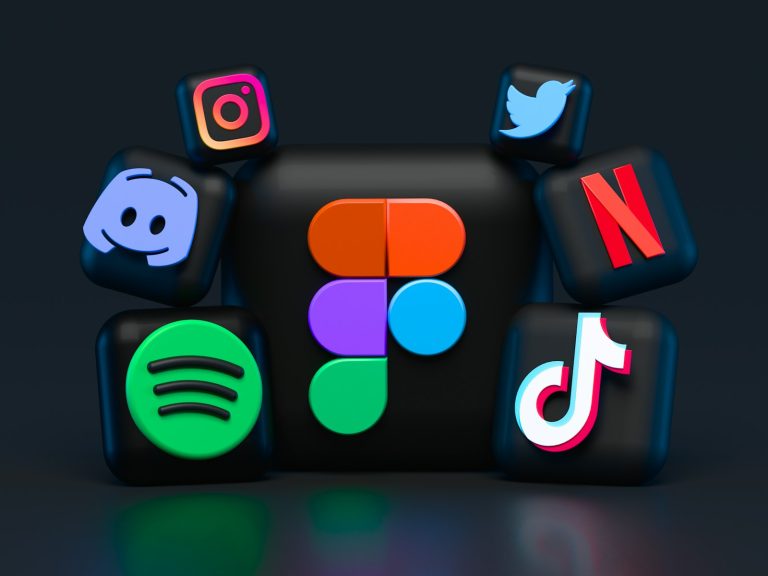
A primary factor at play is our attention: both the powerful and sophisticated forces that capture it, and how we’ve been psychologically trained to spend it. The attention economy in marketing demonstrates how user attention can be treated as currency, bringing profit to companies when leveraged. Modern businesses have realized that whoever captures attention captures value, leading to unprecedented investment in attention capture technologies and techniques.
It typically takes three seconds to capture attention before the mind moves to something else. This creates intense pressure for content creators, marketers, and platforms to design maximally attention-grabbing experiences. Campaigns with emotional content perform twice as well as non-emotional content. The result is an arms race of increasingly sophisticated psychological manipulation designed to hijack attention through emotional triggers, variable rewards, social proof, and other mechanisms that exploit cognitive vulnerabilities.
For businesses and professionals, understanding and leveraging this economy is essential to achieving regenerative growth and engagement. To a certain extent, the digital economy manifests as an attention economy, and attention economics is bound to grow into an important economic theory in the digital era. Major technology companies employ thousands of engineers and designers focused on maximizing “engagement”—a euphemism for capturing and holding attention as long as possible regardless of whether that serves users’ interests.
The sophistication of attention-capture technology has reached levels that would seem dystopian to previous generations. Algorithms analyze billions of data points to predict what content will capture your specific attention. A/B testing optimizes every color, word, and notification timing. Autoplay features remove the friction of active choice. Infinite scroll eliminates natural stopping points. Social features create fear of missing out. The platforms competing for attention have resources, intelligence, and incentives vastly exceeding any individual’s capacity to resist.
The Cognitive Costs of Attention Misallocation
The continuous influx of digital stimuli can impair focus, reduce attention spans, and even contribute to mental health challenges such as anxiety and burnout. For businesses, this means crafting strategies that not only capture attention but also sustain meaningful and lasting engagement. However, most platforms optimize for capturing attention rather than providing value, creating misalignment between what captures attention and what serves wellbeing.
The operation of psychological mechanisms entails the consumption of resources—attention allocation incurs costs, and individuals must exert commensurate efforts to do so effectively. Properly allocating attention enables continuous progress, but achieving effective attention allocation such as controlling and maintaining attention and allocating it to acquire new knowledge and skills in response to new emergencies or uncertainties requires great effort. The cognitive load of constantly deciding where to direct attention in environment of overwhelming options creates decision fatigue and mental exhaustion.
We worry about being productive and obsess over time management, output, and impact, but we spend far less time asking the more fundamental question: What is getting my attention—and why?. This failure to audit attention allocation means most people unconsciously surrender their most valuable resource to whatever is most immediately salient, emotionally provocative, or algorithmically optimized to capture it rather than what actually matters most to their lives and goals.
Time x Energy = Attention. In other words, your most valuable resource is your attention, so protect it. Do that like it’s the most precious thing in the world and make sure you’re channeling it to things that matter to you most. Without intentional protection, attention gets consumed by forces designed to extract it for others’ benefit rather than allocated according to your own values and priorities.
Attention Allocation and Decision-Making
Attention economics studies the optimal allocation of attention, a psychological resource. In information-rich environments, information processing tasks become highly complex. According to Kahneman’s dual-cognitive-systems theory, individuals under these circumstances allocate attention through System 1 and System 2. System 1 operates on intuitive, perceptual, and emotional mechanisms, driving attention allocation through heuristics and framing effects. System 2 is deliberative, with attention allocation driven by careful calculation of trade-offs.
When faced with multiple options, the brain tends to allocate attention to the opportunities perceived as having the highest risk or the greatest returns, which maximizes efficiency. This evolutionary adaptation served humans well in environments where immediate threats and opportunities required rapid attention allocation for survival. However, in modern information environment, the most salient stimuli—the ones that automatically capture System 1 attention—are often deliberately designed for maximum salience rather than actual importance.
The regular switching between System 1 and System 2 mainly serves the purpose of economizing the scarce resource of attention. Constrained by cognitive costs, individuals often rely on System 1, with System 2 only engaged in response to complex tasks. This creates vulnerability where attention defaults to fast, emotional, heuristic-driven processing that modern media environment is specifically designed to exploit. The content that captures attention through System 1 isn’t necessarily content that serves your interests, yet System 2 deliberation is too cognitively expensive to apply to every attention decision.
Every single day, we face the decision of what to focus on. For individuals with ADHD, this task can be significantly more challenging, requiring extra effort to direct their attention effectively. Nevertheless, the power to manage our focus remains within our grasp. The question isn’t whether you’ll allocate attention—that’s inevitable—but whether you’ll do so intentionally according to your values or reactively according to whatever is most designed to capture it.
The Business of Attention Capture
Making the attention economy work in marketing involves understanding how to get the “best bang for the buck” as it relates to capturing and maintaining the attention of the intended audience and encouraging them to take a desired action over other options. The entire advertising industry, worth hundreds of billions of dollars annually, exists to purchase access to human attention. Social media platforms, search engines, streaming services, and news sites provide free content specifically to attract attention they can sell to advertisers.
As more content and more apps drive more competition for attention, we’re seeing a shift to ways to more effectively mine value from that increasingly finite resource. Hard paywalls are back. The business model evolution reflects the growing recognition of attention scarcity. When attention was abundant relative to content, free content supported by advertising worked. As attention becomes scarcer, direct payment for attention access becomes more viable, with subscription models proliferating across media, entertainment, and information services.
Whether it is algorithms, machine learning, or large language models, the core of these modern information technologies lies in the design of attention allocation. The technological infrastructure of digital age is fundamentally attention-allocation architecture. Recommendation algorithms decide what captures your attention. Search engines determine which information you attend to. Social media feeds curate which posts receive your focus. Every major technology platform is essentially an attention-allocation mechanism optimized for specific objectives.
To thrive in the attention economy, businesses should prioritize quality over quantity. Immersive, high-quality content that resonates deeply with target audiences will stand out in the crowded digital space. Additionally, as consumers become more aware of the value of their attention, there is a growing movement toward more intentional digital consumption. Concepts such as digital detoxes, apps that track and limit screen time, and platforms that promote undistracted engagement are gaining traction.
Reclaiming Attention as Personal Resource
There’s a tenderness in admitting you’ve been distracted from yourself. It’s uncomfortable but also strangely hopeful, because attention is a “built in” resource, a renewable resource. You can always begin again. You can always bring it back. Unlike money or time once spent, attention can be reclaimed and redirected. The renewable nature of attention provides hope that awareness and intention can restore control over this essential resource.
We pay attention to what we care about. Words can be easily spoken, but the act of simply paying attention speaks volumes about what matters to a person. This truth cuts both ways. Your attention reveals your actual priorities regardless of what you claim to value. If your attention goes primarily to social media, entertainment, and distraction, those are your functional priorities despite stated commitments to career, relationships, or personal growth. Conversely, deliberately allocating attention to what you claim to value is how stated values become actual priorities.
Your attention is your most valuable resource, so choose carefully how, where, and when you will allocate it to do your most important work. This requires conscious attention management treating your attention allocation as the most important decision you make repeatedly throughout each day. Most people manage their money more carefully than their attention despite attention being more valuable because money can only buy things while attention determines your actual lived experience and what you create with your life.
The ability to protect attention from forces designed to capture it represents critical skill for thriving in modern world. This includes environmental design to reduce unnecessary decision-making and distraction, technology boundaries to prevent attention hijacking, mindfulness practices to strengthen intentional attention control, and regular auditing of attention allocation against stated values. Without active protection, the sophisticated attention-capture mechanisms of modern digital environment will consume attention by default, leaving nothing for what actually matters.
Attention is the most valuable resource today because it’s simultaneously the gateway to all experience and value creation, inherently scarce and non-expandable, targeted by increasingly sophisticated capture mechanisms, poorly managed by most individuals, and essential for everything from decision-making to relationship quality to professional success to personal wellbeing. In an age of information abundance, the bottleneck isn’t access to information, entertainment, or communication—it’s the human capacity to attend to anything at all. Whoever controls attention controls not just economic value but the quality and content of human life itself.