Why Trust in Governments Is Declining Worldwide?
Trust in government has collapsed across the democratic world reaching historic lows that threaten the stability of political systems. In the United States, only sixteen percent of Americans trust the federal government to do what is right most of the time as of September 2024. This represents one of the lowest measures in nearly seven decades since the question was first asked and is lower than the twenty two percent recorded the previous year. The United Kingdom, France, Italy, Spain, Australia, South Korea, Brazil, and dozens of other democracies show similar patterns of eroding confidence in elected institutions.
This isn’t just dissatisfaction with current leaders or temporary frustration with specific policies. New research analyzing over five million survey respondents across 143 countries between 1958 and 2019 reveals a sustained long term decline in trust in representative institutions like parliaments, governments, and political parties. Trust in parliament has declined by around nine percentage points from 1990 to 2019 across democracies globally. Today, over half of the global population has little or no trust in their government with fifty seven percent of people claiming their level of confidence in government is low.
The decline of public trust in political authorities is central to the challenges facing democratic governments in many countries today. Low political trust tends to be associated with support for populist parties and leaders who rail against the political establishment and makes it harder for governments to respond to crises such as climate change and the Covid-19 pandemic. Understanding why this crisis of confidence is happening matters because the consequences extend far beyond polling numbers into the fundamental functioning of democracy itself. When citizens lose faith in institutions needed for democratic governance, they become vulnerable to candidates who appear intent on dismantling democracy as we know it.
Economic Failures Breed Distrust
Economic performance fundamentally shapes public trust in government. The 2008 global financial crisis marked a turning point where trust in parliament and government took a global nosedive. Citizens who witnessed governments bail out banks while ordinary people lost homes, jobs, and savings learned that the system protects powerful interests over public welfare. This perception that economic rewards are not being shared fairly feeds the broader crisis of trust.
Negative perceptions of the economy lead to declining public trust in government. When people struggle financially despite working hard, when wages stagnate while costs rise, and when economic security feels increasingly precarious, they blame the political system for failing to deliver prosperity. The long tail of the global financial crisis combined with growing anxiety about future job prospects creates sustained dissatisfaction with governments perceived as unable or unwilling to improve economic conditions for ordinary citizens.
Economic and social shocks including the 2008 financial crisis, the Covid-19 crisis, and the Russia-Ukraine war have eroded public confidence in governmental leadership. Each crisis reveals government limitations in protecting citizens from economic harm. When inflation spikes after government stimulus spending, when supply chain disruptions cause shortages, when energy prices soar due to geopolitical conflicts, citizens experience economic pain they attribute to government failures regardless of how much control governments actually had over global economic forces.
Countries pursuing far-reaching economic reforms are experiencing the largest decreases in public trust in government. This paradox where attempts at improvement generate distrust reflects that economic transitions create winners and losers with those harmed by reforms becoming deeply distrustful even if reforms benefit the broader economy long term. The political cost of economic change often outweighs any credit governments receive for eventual improvements.
Corruption Destroys Credibility
Corruption both feeds and is fed by the broader crisis of trust sustaining a vicious cycle that undermines economic health and social cohesion. When citizens witness politicians enriching themselves through public office, awarding contracts to cronies, accepting bribes, or using positions for personal gain, they conclude the entire system is rigged against ordinary people. The perception that government serves corrupt insiders rather than public interest makes trusting any political institution seem naive.
Scandals associated with Congress and government lead to declining public trust. Each revelation of misconduct, each ethics violation, each instance of politicians lying or being caught in hypocrisy confirms citizen suspicions that those in power cannot be trusted. The cumulative effect of steady drip of scandals creates atmosphere where cynicism about government becomes default reasonable position rather than paranoia.
When young people around the world are asked about dissatisfaction with institutions, one theme comes up repeatedly: corruption, the abuse of public office for private gain. Younger generations who came of age during an era of institutional failure and visible corruption have no memory of times when government functioned better or enjoyed higher trust. Their baseline expectation is that government is corrupt and self-serving, making trust nearly impossible to establish without dramatic reforms proving otherwise.
The vicious cycle operates where lack of trust enables more corruption as citizens disengage from oversight and accountability while corruption validates distrust creating reinforcing loop. Breaking this cycle requires not just punishing corruption but rebuilding systems that prevent it and demonstrating through consistent action that government serves public rather than private interests. Few governments manage this transformation.
Perceived Unfairness Fuels Anger
Perceived social fairness has a mediating effect on the relationship between perception of government authority during crises and changes in trust in government. When citizens feel they’re not being treated equally in society, that rules apply differently to powerful versus ordinary people, that opportunities are distributed unfairly, they lose faith in the government supposedly ensuring equal treatment and justice. The gap between proclaimed values of fairness and lived experiences of inequality creates deep resentment.
Perceived fairness, that is being treated equally in society, can precipitate distrust in the government especially during crises. When some groups receive bailouts while others face foreclosure, when some communities get resources while others are neglected, when enforcement of rules is selective based on wealth or connections, citizens conclude the system is fundamentally unjust. This perception destroys trust more effectively than any specific policy failure.
Income inequality reaching historic levels in many countries makes fairness concerns particularly acute. When wealth concentrates among small elite while majority struggle, when CEO compensation grows exponentially while worker wages stagnate, when tax burdens fall heaviest on middle class while wealthy use loopholes, the unfairness becomes undeniable. Citizens blame government for creating or at minimum tolerating this inequality through policies favoring the wealthy.
The perception that government is captured by special interests serving corporations, the wealthy, and connected insiders rather than representing ordinary citizens creates fundamental legitimacy crisis. Democracy requires belief that government responds to public will. When citizens conclude that money and connections determine outcomes rather than votes and public opinion, democratic legitimacy collapses regardless of how free and fair elections technically are.
Information Environment Sows Confusion
The modern information environment characterized by social media echo chambers, deliberate disinformation, partisan media, and erosion of shared facts makes trusting any institution including government increasingly difficult. When citizens cannot agree on basic facts, when every claim has contradictory counterclaim, when distinguishing truth from propaganda requires expertise most lack, default skepticism about everything including government statements becomes rational response.
Authoritarian minded governments are showing an increase in public faith in officials by controlling information flow. This reveals that trust can be manufactured through propaganda and censorship preventing citizens from accessing information that would generate distrust. Democratic governments lacking such control face citizen populations exposed to constant stream of negative information, partisan attacks, and amplified scandals making trust nearly impossible to maintain.
Social media algorithms that promote outrage and conflict amplify stories of government failure while burying successes. Citizens are exposed to constant negativity about institutions creating perception that things are worse than reality. Even when government functions reasonably well in many areas, the information environment highlights only failures and controversies making balanced assessment nearly impossible for most citizens.
The erosion of trusted mainstream media that historically mediated between government and citizens means direct government communication is filtered through partisan outlets with obvious bias or social media filled with disinformation. The lack of credible intermediaries explaining government actions and providing context leaves citizens confused about what to believe defaulting to distrust as safest position when information is unreliable.
Representative Institutions Specifically Decline
Trust in representative institutions such as parliaments, governments, and political parties has been declining in democratic countries while trust in non-representative institutions such as the police, civil service, and legal system has remained stable or rising. Trust in the police rose by around thirteen percentage points from 1990 to 2019 even as trust in parliament fell nine points. This divergence points to a particular crisis of confidence in countries’ elected representatives rather than general distrust of all institutions.
Declining trust in government appears to be rooted in how politics is practiced which is seemingly less inspiring to citizens today rather than in a growing distaste for social institutions in general. Citizens witness constant partisan conflict, politicians more interested in scoring points against opponents than solving problems, policy making paralyzed by polarization, and representatives more responsive to donors and party bases than median voters. The dysfunction makes representative democracy look incapable of addressing problems.
Trust in parliament is declining in thirty six democracies including Argentina, Brazil, France, Italy, Spain, South Korea, Australia, and the United States and has only risen in six. The widespread nature of the decline across diverse political systems and cultures suggests common causes rooted in how modern representative democracy functions rather than country specific failures. The model itself seems increasingly unable to generate and maintain trust.
The finding that implementing institutions maintain or increase trust while representative institutions lose it suggests citizens distinguish between government as administrative apparatus and government as political leadership. They trust civil servants to do jobs competently but distrust politicians to make good decisions or represent their interests. This creates unstable situation where the machinery of government functions but political leadership lacks legitimacy.
Crisis Mismanagement Reveals Incompetence
Perceptions of the performance of central institutions during crises determine trust. The COVID-19 pandemic provided stress test of government competence that many governments failed spectacularly. Citizens witnessed conflicting guidance, inadequate preparation, political considerations overriding public health advice, and failures to protect the most vulnerable. The visible incompetence during crisis when government capacity matters most devastated trust even among those previously supportive.
Low political trust makes it harder for governments to respond to crises because citizens don’t follow guidance from institutions they don’t trust. This creates vicious cycle where distrust undermines crisis response which generates more distrust. During pandemic, countries with higher pre-existing trust had more compliant populations and better outcomes while countries with lower trust faced resistance to public health measures resulting in worse outcomes that further eroded trust.
The perceived threat posed by a crisis and attributions of crisis responsibility shape trust changes. When government is blamed for causing crisis or making it worse through incompetence, trust collapses. When crisis is viewed as external threat and government is seen as doing its best under difficult circumstances, trust can actually increase through rally around the flag effects. The difference depends on perceptions of government competence and responsibility.
Climate change represents ongoing crisis where government failures to take adequate action despite scientific warnings erode trust among those most concerned about the issue. The gap between what government says about climate urgency and minimal policy action taken creates credibility problem. Similarly, failure to address other long term challenges like infrastructure decay, pension sustainability, or healthcare access demonstrates government inability to solve known problems undermining confidence in institutional capacity.
Polarization Fractures Consensus
Growing political polarization means significant portions of populations distrust government when the other party controls it. In highly polarized environments, government legitimacy depends on which party is in power rather than institutional respect transcending partisan divides. This means roughly half the population distrusts government at any given time based purely on partisan identity regardless of performance.
Some decline in trust may be driven by polarization of trust between a more trusting majority and a deeply distrusting minority. As societies fracture into opposing camps with incompatible worldviews, the middle ground where institutional trust could exist disappears. Those on losing side of political conflicts conclude institutions are illegitimate because they produce outcomes they oppose leading to fundamental rejection of system rather than acceptance of democratic defeats.
Culture wars of our day, attitudes towards immigration, and various social conflicts drive trust declines beyond purely economic factors. When government takes positions on contentious social issues, it necessarily alienates significant portions of population who hold opposing views. In less polarized eras, such disagreements didn’t translate into fundamental distrust of institutions. In current environment, any government position on contentious issues is interpreted as taking sides in tribal conflict generating distrust from disfavored side.
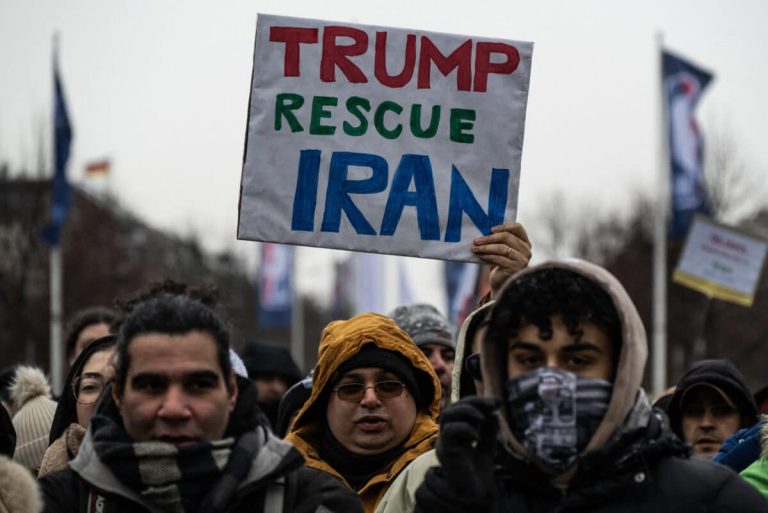
The increase in populist parties and leaders who explicitly campaign against political establishment reflects and reinforces declining institutional trust. Populists succeed by validating citizen distrust and promising to dismantle corrupt establishment institutions. Their rise both reflects existing trust deficits and actively works to deepen them by attacking institutions as illegitimate. This creates downward spiral where distrust enables populists who deepen distrust through attacks on institutions.
The Stakes Are Democracy Itself
In the United States, trust in federal government has been in sharp decline over the past couple of decades and it is no coincidence that we are now seeing a dramatic assault on democratic institutions there led by a candidate who was elected after promising to do exactly that. The connection between declining trust and anti-democratic politics is clear. When citizens lose faith in democratic institutions, they become receptive to authoritarian alternatives promising to replace dysfunctional democracy with strong leadership.
While there is still evidence that citizens largely support the idea of democracy, large numbers of them have lost faith in the institutions that are needed for democratic governance leading some to vote for candidates who appear intent on dismantling democracy as we know it. This represents existential threat where democracy dies not through military coup but through citizens voluntarily abandoning it after losing faith in its institutions.
Declining trust in government in turn leads to less positive evaluations of Congress and reduced support for government action to address a range of domestic policy concerns. This creates governance crisis where even when government wants to address problems, lack of public trust prevents policy implementation. The legitimacy necessary for government to function effectively disappears when citizens refuse to cooperate with institutions they don’t trust.
Declining trust in democratic institutions isn’t inevitable. If it is something about the way democratic politics is practiced that citizens distrust, perhaps those politics need to change. Denmark, Norway, Sweden, Switzerland, Ecuador, and New Zealand buck the global trend with trust rising in representative institutions there. This demonstrates trust can be rebuilt or maintained through good governance, responsive politics, and demonstrated competence suggesting the decline is policy choice not inevitable trend. But changing requires political will to reform institutions and practices currently failing to generate trust, reforms most governments resist because they threaten existing power structures benefiting from current dysfunction.